How To Choose A Pressure Washer
A practical step-by-step guide to how to choose a pressure washer, including preparation, instructions, common issues, tips, and next steps.
How To Choose A Pressure Washer
Choosing the right pressure washer transforms tough outdoor cleaning from a chore into a quick, satisfying task. This guide helps you navigate the specifications, types, and features to find a machine that perfectly matches the jobs you need to do, whether it's gently washing your car or blasting stubborn grime from a stone patio. We'll help you invest wisely, avoiding the common pitfalls of buying a machine that's either too weak for the job or so powerful it risks damaging your property.
Fast Answer
- Match Power to Task: Choose pressure (bar) and flow rate (l/m) based on your primary jobs.
- Electric for Home Use: Most homeowners are best served by a reliable electric model.
- Features Matter: Look for a long hose, useful nozzles, and good on-board storage.
- Build Quality Pays: Prioritise durable pumps and motors for longevity.
Before You Start
- Make a Job List: Write down all the things you want to clean, from the most frequent (like the car) to the toughest (like the driveway).
- Check Your Services: Ensure you have easy access to an outdoor water tap and an RCD-protected power socket near where you'll be working.
- Measure Your Space: Figure out where you will store the pressure washer. They can be bulky, so check dimensions.
- Set a Realistic Budget: Decide how much you're willing to spend. This will help narrow down the options significantly.
Step-by-Step Instructions
Identify Your Main Cleaning Jobs
The first and most critical step is to be honest about what you'll use the pressure washer for. This will determine the power and features you need. Group your tasks into categories to get a clear picture.
- Light-Duty Tasks: These require lower pressure to avoid damage. Think of jobs like washing cars, motorcycles, bicycles, garden furniture, wellies, and windows. These tasks are often done more frequently.
- Medium-Duty Tasks: This is the typical territory for most homeowners. It includes cleaning patios, wooden decking, fences, brick walls, and plastic guttering. These jobs need a good balance of power and control.
- Heavy-Duty Tasks: These are the big, tough jobs that require significant power to shift stubborn dirt. Examples include cleaning large, grime-covered driveways, removing moss and lichen from stone walls, cleaning farm equipment, or stripping old, flaking paint.
Your "core" task is the most demanding job you plan to do regularly. You should choose a machine that can handle this core task comfortably, as it will easily manage all the lighter-duty jobs as well, often with a simple change of nozzle or pressure setting.
Understand the Key Specifications
The numbers on the box can be confusing, but they are the key to understanding a machine's performance. Focus on these three main metrics:
Pressure (bar): This measures the force of the water jet. Higher bar means more power to cut through dirt.
- Up to 110 bar: Ideal for light-duty tasks like washing cars and garden furniture.
- 110 - 140 bar: The sweet spot for most medium-duty home use, perfect for patios, fences, and decking.
- 140+ bar: Reserved for heavy-duty work on hard, non-delicate surfaces like stone and concrete.
Water Flow Rate (litres per minute or litres per hour): This measures the volume of water the machine pumps out. A higher flow rate means you can rinse away dirt faster, significantly speeding up your cleaning time. A high bar rating with a very low flow rate can be slow and ineffective. Look for a good balance between the two.
Motor Power (Watts or W): This indicates the power of the electric motor. While not a direct measure of cleaning performance, a higher wattage (e.g., 2000W or more) generally supports higher pressure and flow rates. It's a good general indicator of the machine's overall capability.
Choose the Right Power Source
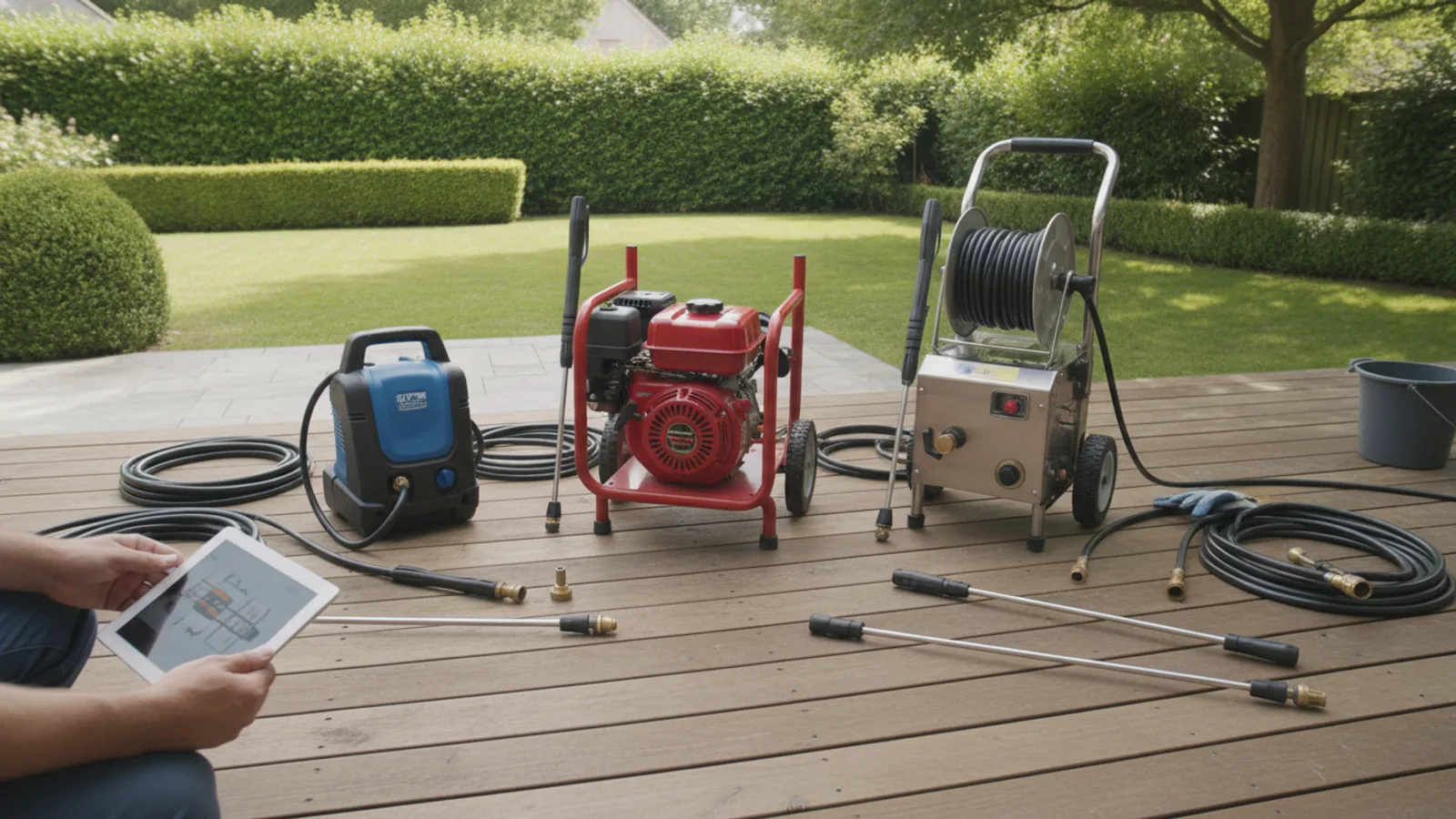
For domestic use in the UK, you have three main choices for how your pressure washer is powered. Each has distinct advantages and disadvantages.
Electric Pressure Washers
These are by far the most common choice for homeowners. They plug into a standard outdoor socket (which must be RCD protected).
- Pros: Lightweight, relatively quiet, easy to start, low maintenance, affordable, and produce no emissions.
- Cons: The power cord limits your range, and they are generally less powerful than petrol equivalents. You must be careful with the cable around water.
Petrol-Powered Pressure Washers
These are for serious, heavy-duty cleaning, often in locations far from a power source.
- Pros: Extremely powerful, completely portable with no cords to manage, ideal for large areas and commercial jobs.
- Cons: Heavy, very noisy, require regular engine maintenance (oil, fuel, spark plugs), produce exhaust fumes, and are more expensive.
Cordless (Battery) Pressure Washers
A newer category, these are designed for ultimate portability for very light jobs.
- Pros: Supremely portable, quick to set up for small tasks like rinsing a muddy bike or cleaning boots.
- Cons: Limited power (much lower than corded electric), very short run times per battery charge, and a high cost for the technology.
Evaluate Crucial Features and Accessories
The right features can make a huge difference to your user experience. Look beyond the raw power numbers and consider these practical elements.
- Hose Length: A longer hose (6 metres or more) is a massive convenience. It means you can leave the machine in one spot while you walk around the car or clean a whole patio section without constantly moving the base unit.
- Nozzles: A good selection of nozzles is essential. A variable pressure lance (Vario) lets you switch between a wide fan spray (for delicate surfaces) and a powerful pencil jet (for stubborn spots). A rotary or "dirt blaster" nozzle spins the jet to cover more area with high power, great for grimy stone.
- On-Board Storage: A well-designed machine will have integrated clips and holders for the lance, trigger gun, nozzles, and power cable. This keeps everything together and prevents loss.
- Detergent Application: Some models have a built-in detergent tank, while others use a suction hose or a special foam bottle attachment that fits on the end of the lance. The bottle attachments often produce better foam, which is ideal for car cleaning.
- Wheels and Handle: For any machine over 10kg, a sturdy set of wheels and a telescopic or fixed handle are non-negotiable for moving it around the garden.
- Hose Reel: A built-in hose reel is a premium feature but one that pays for itself in reduced frustration. It makes winding and unwinding the high-pressure hose simple and tidy.
Consider Build Quality and Durability
A pressure washer is a powerful tool with a high-speed motor and pump. The quality of these core components will determine how long it lasts, especially with frequent use.
Pump Material: The pump head is the heart of the machine. Pumps made from brass are the most durable and are found in high-end and professional models. Aluminium pumps are a good mid-range option, offering better longevity than the plastic or "composite" pumps found on the cheapest entry-level machines.
Motor Type: Electric pressure washers typically use one of two motor types. Universal motors are lightweight and cheap but are also noisy and have a shorter lifespan. Induction motors are heavier, quieter, and much more durable. For regular use, an induction motor is a worthwhile investment. Some premium models feature water-cooled induction motors, which offer the best durability by actively managing heat during long jobs.
Warranty and Support: Check the warranty period offered. A longer warranty (2-5 years) is a good indicator of the manufacturer's confidence in their product. Ensure that service and spare parts are readily available in the UK.
Quick Reference
| Situation | Use This Specification | Why |
|---|---|---|
| Washing the family car | 110 bar, Vario fan nozzle | Provides enough power to remove dirt without risking damage to the paintwork. A wide fan spreads the pressure. |
| Cleaning a small wooden deck | 120 bar, wide fan nozzle | Effectively cleans algae and dirt. The fan nozzle prevents the high pressure from splintering or gouging the soft wood. |
| Medium-sized, moderately dirty patio | 130 bar, 450+ l/h flow, Vario nozzle | A great all-round combination. Good pressure for cleaning with a decent flow rate to rinse the area efficiently. |
| Large, grimy stone driveway | 145+ bar, 500+ l/h flow, rotary/dirt blaster nozzle | Maximum power is needed to shift embedded grime and lichen. The rotary nozzle and high flow rate clean large areas quickly. |
Common Problems When You Choose a Pressure Washer
Avoiding these common purchasing mistakes will save you time, money, and frustration.
- Buying on "Max Pressure" Alone: Many brands advertise a peak pressure number that the machine can't sustain. This leads to disappointment when it underperforms. The fix: Focus on the "rated" or "operating" pressure and the water flow rate (l/m) for a true picture of its cleaning power.
- Underestimating Your Needs: Buying an entry-level model to clean a large, filthy driveway will lead to incredibly slow progress and premature wear on the machine. The fix: Buy a machine rated for your toughest recurring job, not just the easiest one.
- Ignoring Ergonomics and Convenience: A short 3m hose and no on-board storage might seem fine in the shop, but it's infuriating in practice. You'll spend more time untangling cables and moving the unit than cleaning. The fix: Invest in a longer hose (at least 6m) and look for models with good storage and a hose reel if your budget allows.
- Forgetting About Storage: That large, powerful machine looks great until you have to find a permanent home for it in a packed garage or shed. The fix: Check the unit's dimensions before you buy and make sure you have a dry, frost-free place to keep it.
Advanced Tips for a Better Choice
For those who plan to use their machine frequently or want the best possible performance, consider these factors.
- Prioritise a Water-Cooled Induction Motor: This is a key feature in premium domestic models. The motor is cooled by the water flowing through it, which dramatically reduces operating temperature, noise, and wear. It's a sign of a high-quality, long-lasting machine.
- Check for Self-Priming Capability: A self-priming pump can draw water from a static source like a water butt or pond, not just a pressurised mains tap. This is fantastic for saving water, working in areas with low water pressure, or for eco-conscious cleaning.
- Insist on a Total Stop System (TSS): This feature automatically shuts off the motor the instant you release the trigger gun. It's now standard on most reputable models, but it's worth confirming. TSS saves electricity, reduces noise, and significantly prolongs the life of the pump and motor.
- Look at the Full Accessory Ecosystem: Check what other attachments are available for the models you're considering. Useful extras can include patio cleaners (a hooded attachment that prevents splashing), angled lances for cleaning gutters, and soft-bristled brushes for cars.
How To Choose A Pressure Washer FAQ
What's more important: pressure (bar) or water flow (l/m)?
They are both equally important and work together. Think of bar as the force that cuts the dirt loose, and litres per minute (l/m) as the volume of water that washes it away. A machine with high pressure but low flow will be slow, while a machine with high flow but low pressure won't shift stubborn grime. The best machines have a strong balance of both.
Can I use hot water from my tap in a standard pressure washer?
No, you must not. Standard "cold water" pressure washers are designed with seals and pumps that will be quickly damaged or destroyed by hot water. You must only use a machine specifically designated as a "hot water pressure washer" if you need to clean with heat.
Do I need an RCD-protected socket?
Yes, absolutely. An RCD (Residual Current Device) is a life-saving device that cuts the power instantly if a fault is detected, preventing a serious electric shock. Given that you are using a high-power electrical appliance with water, using a socket without RCD protection is extremely dangerous. Most modern outdoor sockets have this built-in, but you can also buy plug-in RCD adaptors.
Are petrol pressure washers better than electric ones?
They are not "better," just different. For the vast majority of homeowners, a good electric pressure washer is the superior choice as it's lighter, quieter, cheaper, and easier to maintain. Petrol models are only necessary for professionals or those who need extreme power and portability in areas with no access to electricity.
Final Checklist for Choosing a Pressure Washer
- I have a clear list of my most common and most difficult cleaning tasks.
- I have determined the right pressure (bar) and flow rate (l/m) for those tasks.
- I have decided that an electric model is the right choice for my home.
- I have checked that the hose and power cable are long enough for my garden.
- I have considered the included nozzles and on-board storage features.
- I am aiming for a model with an aluminium or brass pump and an induction motor if possible.
- I have measured my shed or garage and confirmed the machine will fit.
- The model I'm considering has a good warranty and is from a reputable brand.